
Mr. Pumpkin Head: Five Ways to Build Language

Updated: Aug 23
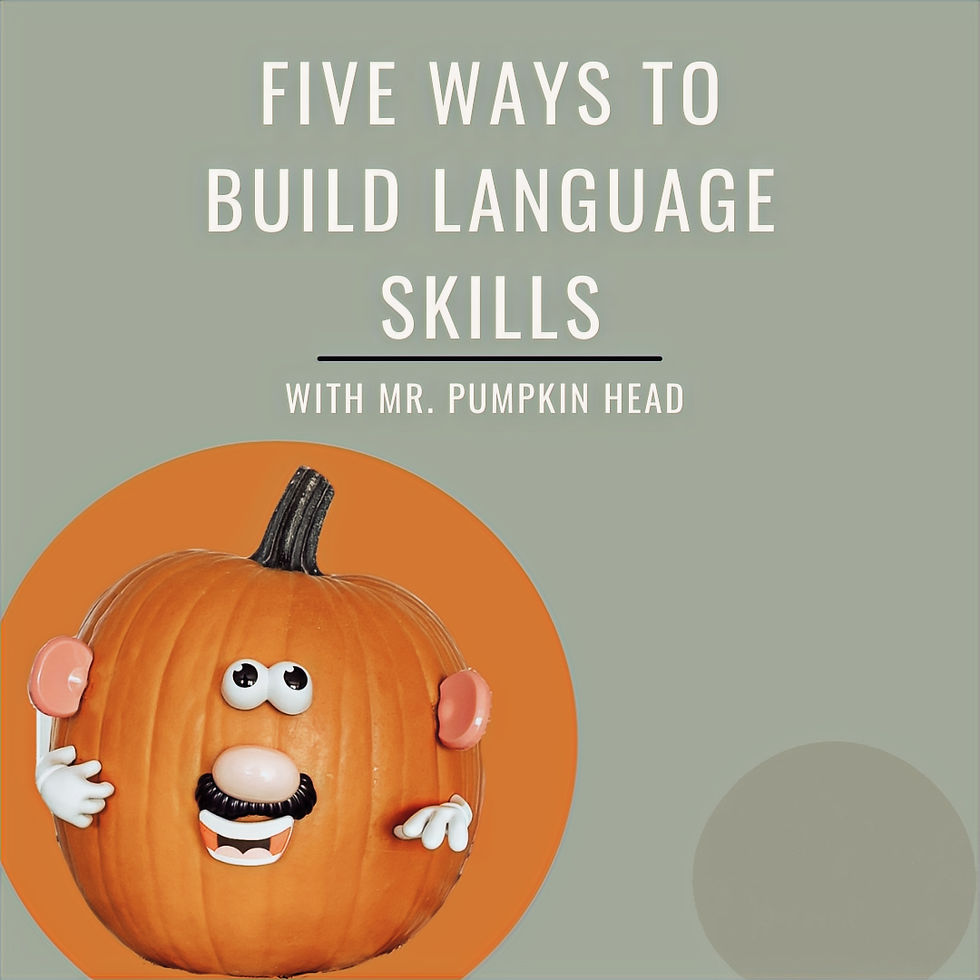
This is one of my favorite fall activities! When working in an elementary school, the other speech-language therapists and I would love to use this in therapy. It brings new life to the Mr. Potato Head parts scattered around your house. It’s also great for littles that can’t carve pumpkins! It’s less messy than paint (I love paint but sometimes I don’t want to deal with it). It’s also surprisingly popular with bigger kids.
Here are Five ways Mr. Pumpkin Head supports language skills.
Learning body parts/accessories: (eyes, nose, mouth, ears, hat, shoes etc ) For children still learning body parts, this is a fun way to reinforce each name and also point to it on you or themselves!
Targeting adjectives with colors: (PINK nose, BLUE eyes, RED lips) Can your child differentiate the red nose from the pink nose using words? Don't be afraid to (occasionally) give the wrong item requested to see how your child reacts.
Introducing prepositions: (I’m putting the mouth BELOW the eyes; or NEXT TO the arms) Kids are such sponges and the more you vocalize what you are doing, the more they are going to pick up on it and start to do it too.
Following directions: (FIRST put the nose on, THEN put the ears on) While the order you put Mr. Pumpkin Head parts on doesn't really matter, there are lots of things where order does matter! e.g. First put your underwear on and then your pants. Ideally, you want that happening the correct order. This is a fun way to practice and it's low stress.
Describing: (My pumpkin has black eyes and a red nose!) After your child makes a pumpkin face, see what they are able to describe to you. Simple descriptions are just fine! For kids who are able, see if they can describe everything in relation to one aspect e.g. eyes - "The red nose is below the eyes, the ears are next to the eyes" etc.
Bonus: Requesting: If you really want some language practice for your child, you can hold the bowl of parts so your child has to ask for something. If this is frustrating for your child, stop and let them play. The most basic request would just be the object e.g. Child says: Eyes. (you give them eyes). As children's language build's our expectations increase (Eyes please; I want the eyes; Can I have the eyes, please?) See how those increase in length and complexity?

Encourage silly face making! I’m always surprised at how much kids start talking when an arm is coming out of the nose hole and vise versa. Feel free to step back and just see what your child says/does without you guiding the activity. While this post shares ways to support building skills in a more interactive way, independent play is great for a host of other reasons.
If you try this tag @speechiemamaco with a picture of your Mr. Pumpkin head!


Comments